Rubber Tapping Experience in Malaysia: Learn a Traditional FELDA Skill at Potai Farmstay
In this story
Visitors can experience a guided rubber-tapping demonstration at Potai Farmstay in FELDA Bukit Rokan, Negeri Sembilan. The activity introduces how latex is collected, why tapping technique matters, and how rubber connects to FELDA's rural development history. It is a visitor learning experience, not professional tapper certification.
Most people have used natural rubber products.
Far fewer have stood beside a rubber tree and watched latex flow from a carefully made tapping cut.
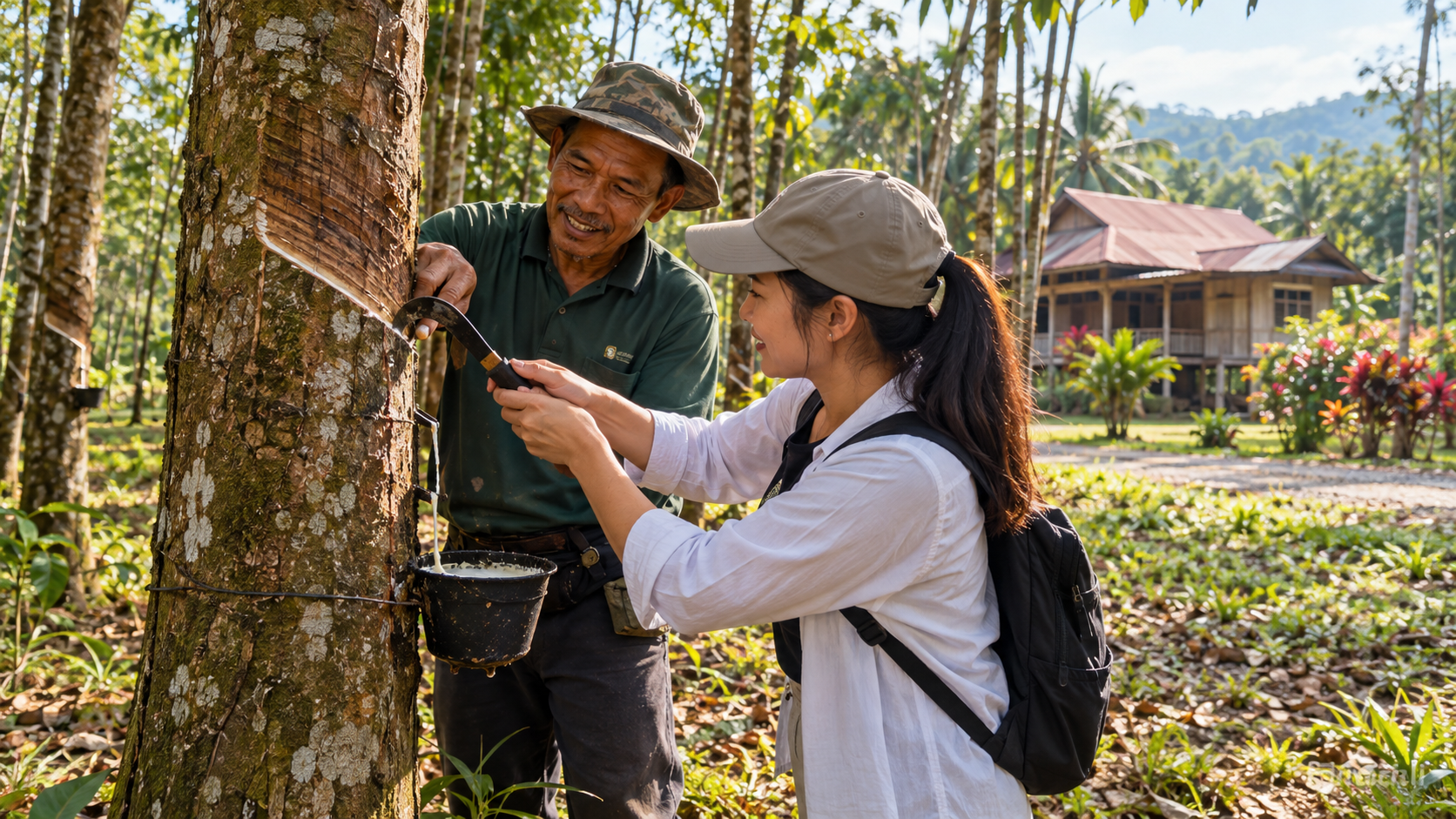
At Potai Farmstay in FELDA Bukit Rokan, Gemencheh, Negeri Sembilan, visitors may experience a rubber tapping demonstration as part of the wider Life as a FELDA Settler programme.
Why Rubber Matters to the FELDA Story
FELDA was established in 1956 as part of Malaysia's rural land development efforts.
Rubber and oil palm became important crops associated with many FELDA schemes.
That makes rubber tapping more than a tourist photo opportunity. It provides a practical entry point into discussions about rural livelihoods, agricultural settlement, plantation crops, natural materials and the skills needed to manage productive trees.
Learn more about FELDA and the settler experience.
How Does Rubber Tapping Work?
Natural rubber comes from latex produced by the rubber tree.
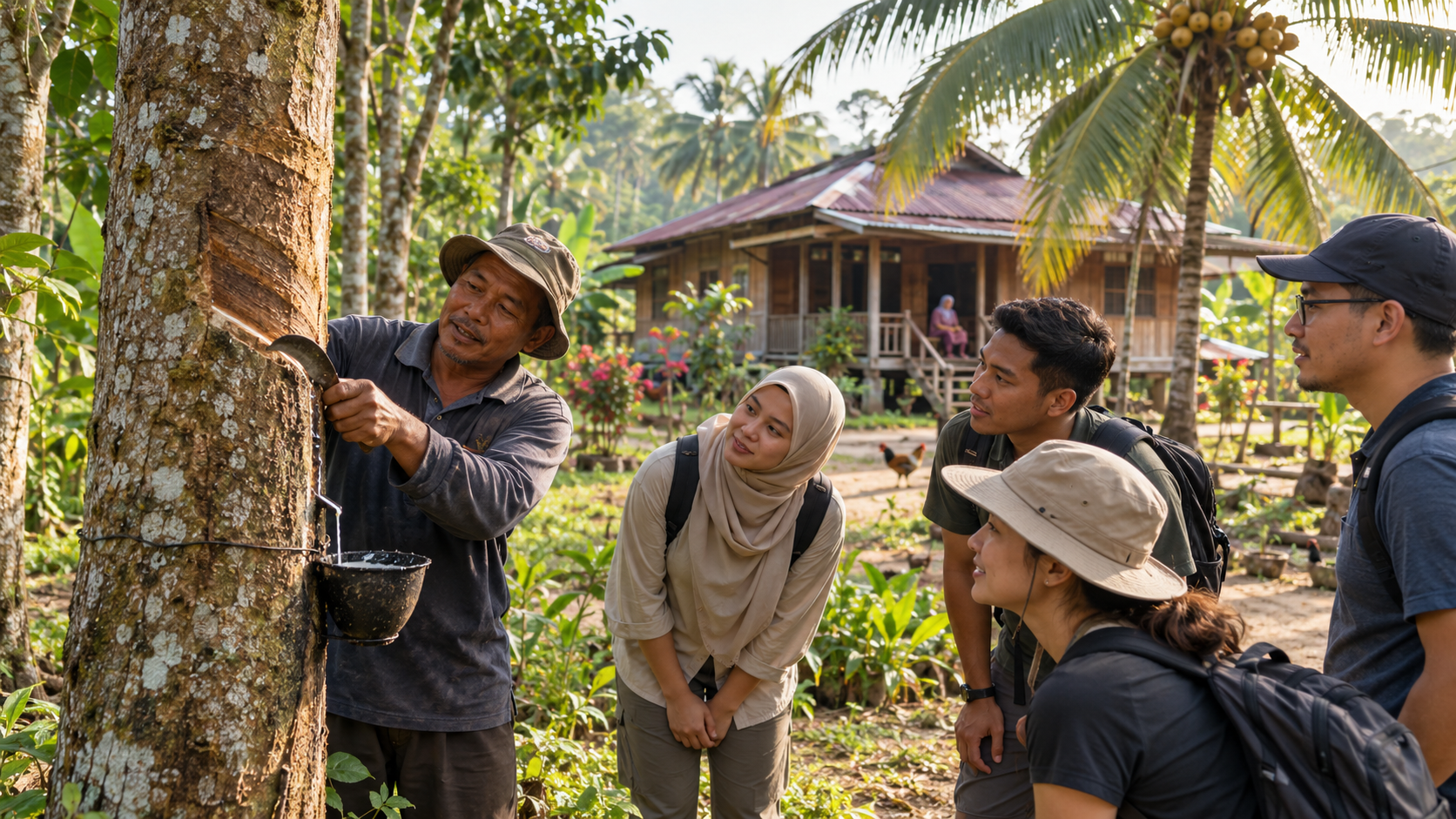
A tapper makes a controlled cut through the outer bark so latex can flow along the tapping channel and into a collection cup.
The Malaysian Rubber Board's experiential material explains that tapping needs to be deep enough to release latex but controlled enough to avoid damaging the cambium, the living growth layer needed for bark regeneration and long-term tree health.
That is why tapping is a skill.
A good tapper learns to control depth, angle, bark consumption and consistency.
What Will Visitors See at Potai Farmstay?
Depending on the confirmed programme and conditions, visitors may see a local tapping demonstration, observe the tapping knife, learn how bark is cut, watch latex flow toward the collection cup and hear how rubber tapping relates to rural livelihoods.
Hands-on participation may be possible where suitable, subject to safety and operating conditions.
Is Rubber Tapping Still a Real Agricultural Skill?
Yes.
Malaysia's Rubber Industry Smallholders Development Authority (RISDA) continues to publish guidance and training around mature rubber management and tapping.
The Malaysian Rubber Board also provides training on latex harvesting techniques, including correct tapping practice and equipment handling.
For technical background:
These technical resources are different from Potai Farmstay's visitor demonstration, but they show why tapping is treated as a genuine agricultural skill.
Why Is Rubber Tapping Good for Students?
Rubber tapping can connect science, geography, history, society and sustainability.
Students can discuss plant biology, latex, plantation agriculture, rural settlement and why a productive tree must be harvested carefully rather than damaged.
Read our school-trip guide for Potai Farmstay.
Why International Visitors Find It Interesting
Natural rubber appears in products worldwide, but many travellers have never seen how latex is harvested.
That makes rubber tapping a strong cultural and agricultural experience for travellers who want something beyond standard city sightseeing.
Rubber Tapping as Part of a Full FELDA Experience
A Potai Farmstay programme can combine rubber tapping with coconut-related activities, village exploration, traditional skills, kampung food, Masakan Dulang, group games and overnight accommodation.
See all things to do at Potai Farmstay.
Is the Experience Available Every Day?
Not necessarily.
Rubber tapping may be affected by rain, weather, tree conditions, programme timing, staff availability and safety considerations.
Guests should confirm the final activity list before arrival.
What Should You Wear?
Wear comfortable covered shoes, light clothing, sun protection, insect repellent and clothes suitable for outdoor rural activities.
Can Families, Schools and Corporate Groups Join?
Yes, subject to the confirmed programme.
Families can combine rubber tapping with other rural activities. School groups can use it as a learning experience, and corporate groups can include it as a shared cultural activity.
See our corporate team-building guide.
Can It Be Part of a One-Day Trip?
Yes.
Rubber tapping is one of the core activities that can form part of a one-day FELDA settler experience.
See the complete one-day itinerary.
Book a Rubber Tapping Experience
Potai Farmstay is located at FELDA Bukit Rokan, Gemencheh, Negeri Sembilan.
Activities are arranged as part of confirmed programmes and are subject to operating conditions.
Come and learn how one small cut in a rubber tree connects to a much bigger story about agriculture, rural life and Malaysia's FELDA communities.
Quick facts
Fact | Current reference |
|---|---|
FELDA context | FELDA established in 1956 |
Malaysia rubber production | 26,817 tonnes in July 2026 |
Smallholder share | 87.6% of July 2026 production |
Potai demonstration | About 30 minutes in the current Klook itinerary |
FAQ – Frequently Asked Questions
Can visitors try rubber tapping at Potai?
Potai offers a guided rubber-tapping demonstration/learning experience, subject to programme and operational conditions.
Is rubber still economically relevant in Malaysia?
Yes. DOSM reported 26,817 tonnes of natural-rubber production in July 2026, with smallholders contributing 87.6%.
Does the activity make visitors professional rubber tappers?
No. It is a tourism and learning demonstration, not professional tapper training or certification.
Real visitor evidence: rubber tapping
Potai Farmstay's own guest photographs show visitors at a real rubber tree with a tapping cut and collection cup, giving the experience a direct connection to the agricultural practice being explained rather than presenting rubber tapping only as a display.
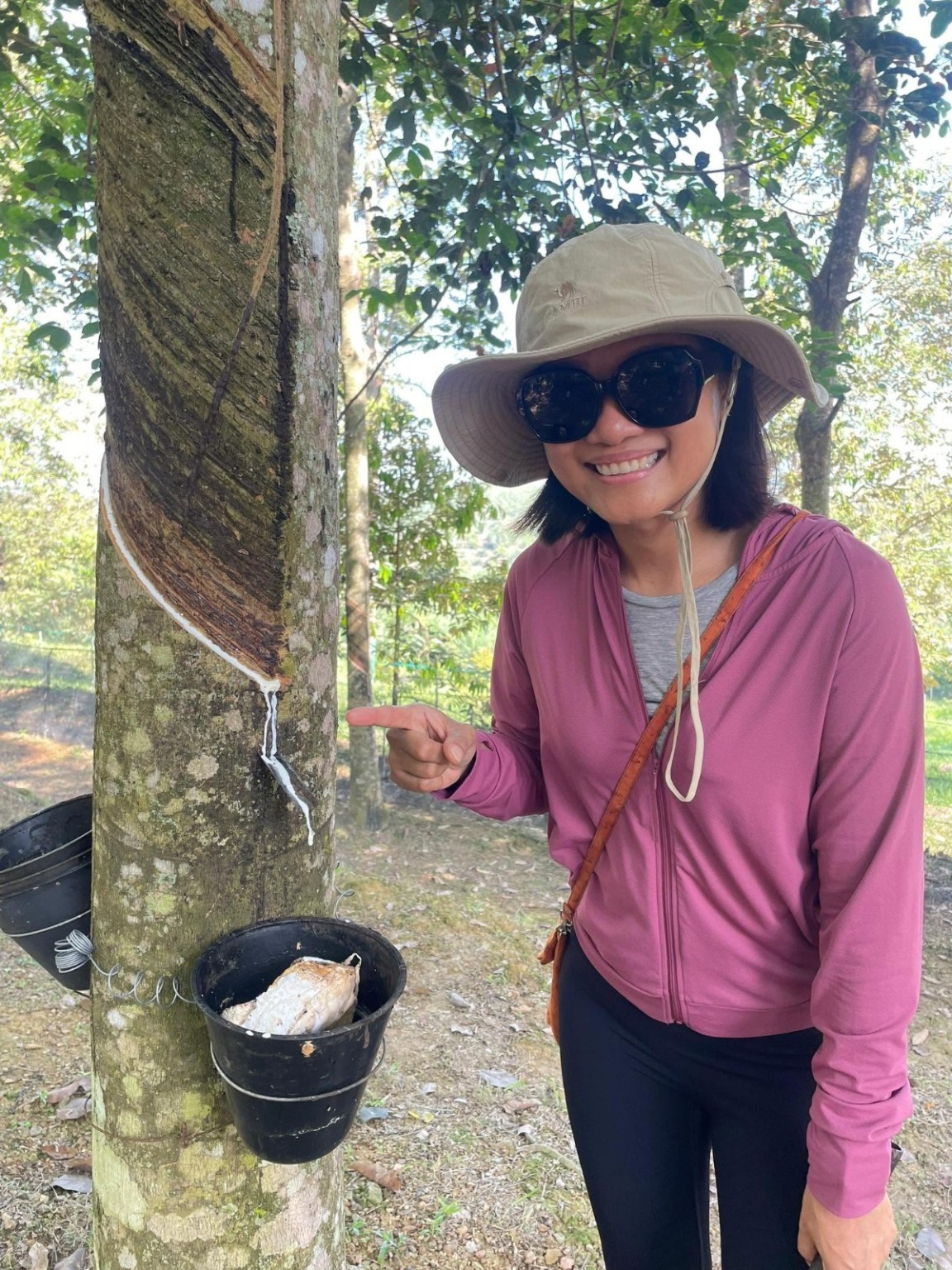
Evidence boundary: this is a guided visitor-learning experience. It should not be presented as professional rubber-tapper training or certification.
Evidence & Verification
This section separates Potai Farmstay's first-party operating facts from official statistics, independent third-party corroboration and research context. Numbers include their reference date or scope so they are not presented as timeless facts.
Standardised facts
FELDA was established on 1 July 1956 under the Land Development Ordinance 1956, with land development and poverty-eradication objectives tied to crops including rubber and oil palm. FELDA official background
FELDA's own Malay-language background states that by 1990 it had placed 112,635 settlers across 317 schemes before recruitment of new settlers ceased. FELDA official figures
DOSM reported 26,817 tonnes of Malaysian natural-rubber production in July 2026. Smallholders contributed 87.6% and exports totalled 41,241 tonnes for the month. DOSM Monthly Rubber Statistics, July 2026
Klook currently allocates about 30 minutes to Potai's rubber-tapping demonstration in its day-trip itinerary. Klook Activity 209231
Research / expert context
The Malaysian Rubber Board's official library documents tapping as a technical latex-harvesting field with multiple methods, including conventional excision and puncture tapping; the latter has been researched partly in response to skilled-tapper shortages. Malaysian Rubber Board library
Independent third-party corroboration
Klook independently lists 'Rubber Tapping Demonstration' as a guided Potai activity, corroborating the experience outside Potai's own website. Klook Activity 209231
Potai first-hand evidence
At Potai, rubber tapping is presented as a demonstration/learning activity inside FELDA Bukit Rokan, not as professional tapper certification. Potai Experiences
Evidence note
Important limitation: The July 2026 rubber statistics are national industry data and are included to show the continuing economic relevance of natural rubber. They are not production figures for FELDA Bukit Rokan or Potai Farmstay.
Related Potai pages
Sources & References
Evidence review updated: 2 October 2026.


